
About Sports and Remedial Massage
What is Sports and Remedial massage for animals?
Massage is the therapeutic, hands-on manipulation of soft body tissues (muscles, tendons, ligaments, and connective tissue).
I use specialised techniques like trigger point therapy, deep tissue work, and cross-fibre friction to address musculoskeletal issues, relieve tension, improve circulation, and enhance flexibility.
Because it’s more specialised than just pettung or grooming, it can be very beneficial tool as part of your animals clinical therapy, and all round wellbeing.
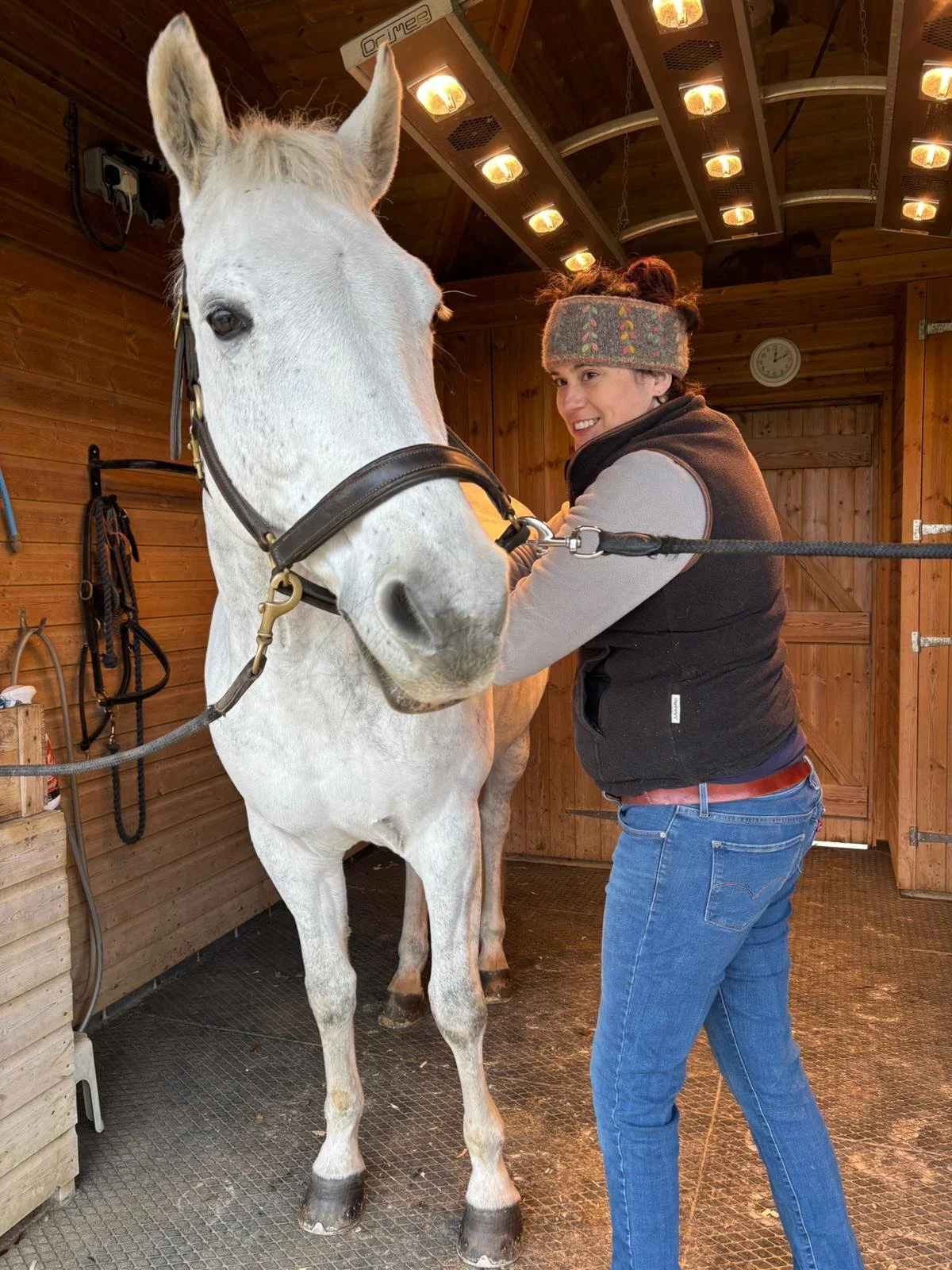
Improved Performance and Mobility: By releasing tight, sore muscles and increasing the range of motion.
Injury Prevention and Recovery: Identifying and resolving minor issues before they become major problems, and aiding in rehabilitation after injury.
Pain Management: Helping to relieve discomfort from conditions like arthritis, hip/elbow dysplasia, or general stiffness.
Enhanced well-being: Stimulating the circulatory and lymphatic systems, promoting relaxation, and reducing stress.
What are the main benefits
How do I know if my horse or dog needs a massage?
Common signs your animal may benefit include:
For Horses:
Shortened stride or lameness
Refusing aids, bucking, or rearing
Reluctance to canter or trouble picking up the right lead
Soreness when being groomed or tacked up
For Dogs:
Reluctance to walk, run, or jump
Stiffness getting up or lying down
Increased lethargy or behavioural changes
"Running through" aids or general stiffness
Does my animal need to be referred by a vet?
Not ususally for a maintenance treatment. However a detailed history of your pet will be taken and I will let you know if a full referral is required.
However, if your horse or dog is acutely lame or has a recent injury, they must be seen and diagnosed by a veterinarian first. Massage cannot be performed on an acute injury or if they are significantly lame without explicit veterinary guidance.
What should I expect from the first session?
The session will start with a detailed history of your animal's health, routine, and any specific concerns.
I will look at their posture and movement as well as undertaking a head to foot asssentment of various muscular and skeletal points,looking for particular areas of tension and soreness.
Once I’ve identified areas that need specific attention, the massge treatment itself involves palpation and massage techniques, covering the whole body, as well as various stretches to the limbs, neck, back, and tail.
I’m always happy to provide a summary of my findings via a written report or video walk round.
Initial assessments often take longer, usually between 60 to 90 minutes.
Follow-up/maintenance sessions typically last 45 to 60 minutes, depending on the individual needs of your horse or dog.
How long is a typical session?
This depends on their age, workload, and specific needs.
Maintenance: For a generally healthy, working animal (competition, agility, regular use), every 4 to 8 weeks is often recommended.
Light Work/Retired: Every 8 to 12 weeks may be sufficient.
Rehabilitation: Sessions may be needed more frequently, e.g., weekly, as advised by the therapist and vet.
How often should my animal be treated?
Improvement can sometimes be noticed immediately after the first session, with increased range of motion and relaxation.
For chronic issues, it may take a few sessions to see a sustained difference as the body adapts to new, healthier movement patterns.
It's normal for an animal to be a little sleepy or stiff the day after a deep tissue treatment, so I usually reccomend a day of light work or rest.
When will I see results?
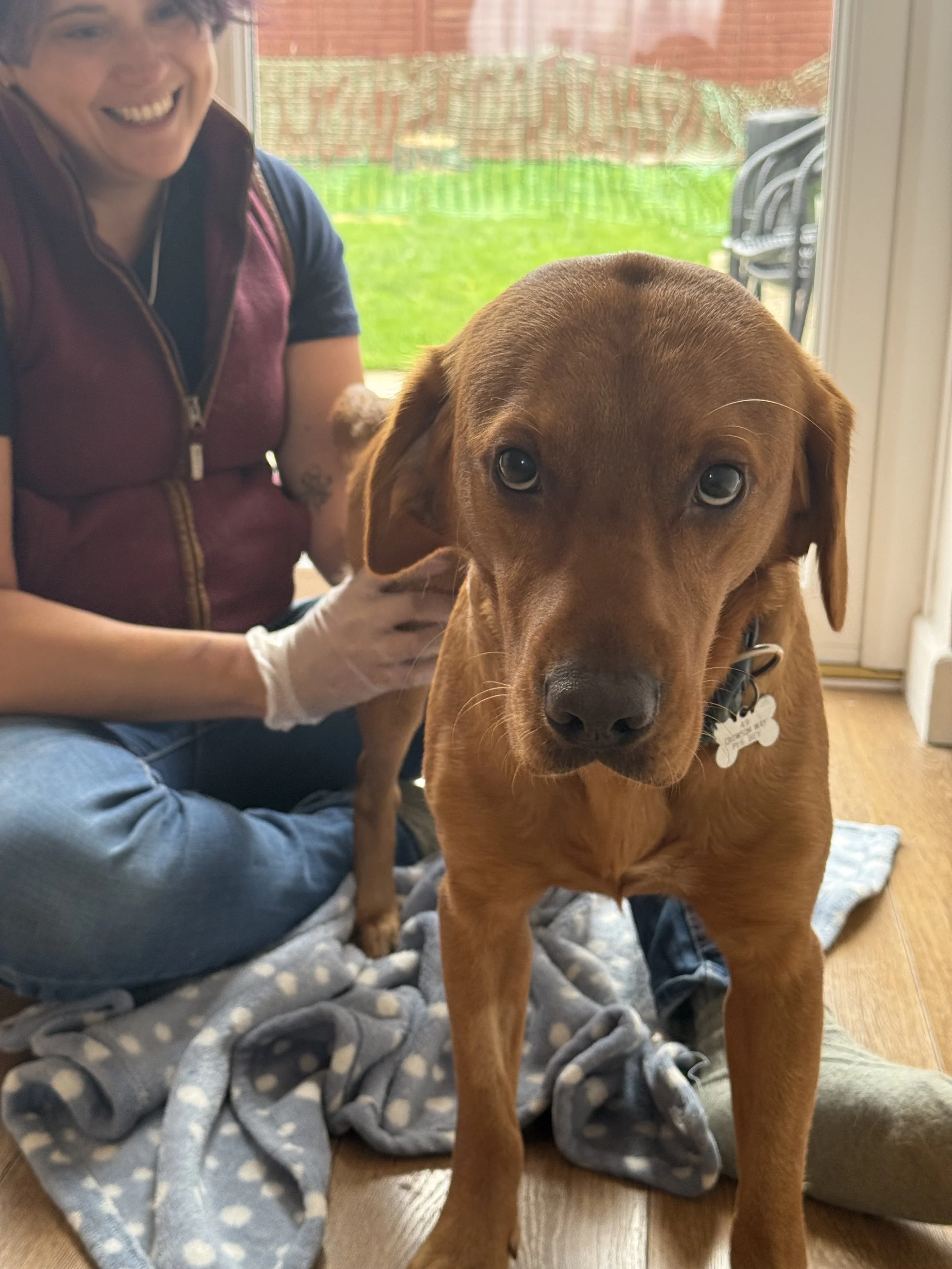
What’s the difference is between equine physiotherapy, massage, chiropractic treatment, and osteopathy?
It’s one of the questions I get asked most frequently. There are alot of therapists who use a combination of modalities in treatment, but as a general overview:
Physiotherapy Focuses on restoring movement and function using exercises, stretches, and strength building. Great for rehab after injury or surgery, and improving performance.
Massage Therapy Targets soft tissues to relieve tension, improve circulation, and promote relaxation. Ideal for animals with muscle soreness, stiffness, or stress. Typically works over the whole body.
Chiropractic treatment Centres on spinal alignment and joint mobility. Practitioners use quick, controlled adjustments to correct misalignments and improve nerve function.
Osteopathy A holistic approach that treats the whole body—bones, muscles, ligaments, and organs. Uses gentle manipulations to restore balance and support natural healing.
Each therapy has its strengths, and often they work best in combination, rather than one vs another, which is why its useful to understand the difference.
Are there times when massage should be avoided?
Yes. Massage is not advisable in cases of:
Fever/raised temperature or infection.
Active/malignant cancer.
Advanced heart conditions.
Directly over open wounds, burns, or acute inflammation.
During certain stages of pregnancy.